The Professor who taught Brazil to dream: FalleN’s legendary Counter-Strike career
FalleN’s story is not only about Major trophies and individual brilliance. It is about the man who built a pathway for Brazilian Counter-Strike and carried its belief across generations.
Counter-Strike has produced more explosive aimers, captains with larger trophy cabinets and AWPers whose statistical peaks appeared almost fictitious. But very few players have changed what an entire country believed was possible. Gabriel “FalleN” Toledo did not merely become the greatest representative of Brazilian Counter-Strike. He helped create the conditions in which Brazilian greatness could exist.
He became the country’s captain, teacher and ambassador, and during its most glorious years, the man standing behind one of the most intimidating AWPs in the world. He carried Brazil from local LAN houses to championship stages, transformed a group of outsiders into consecutive Major winners and remained relevant long enough to guide another generation back to the summit nearly a decade later.
In April 2026, FalleN announced that he would retire from professional competition at the end of the year. By then, he had spent approximately 23 years playing Counter-Strike. The announcement did not feel like an ordinary veteran preparing to leave. It felt like one of the game’s foundational figures had finally begun writing his last chapter.
FalleN’s career cannot be understood only through the championships he won or the opponents he defeated. His most enduring achievement was making Brazil believe that it belonged at the centre of Counter-Strike.
Before the trophies, there was the mission
FalleN first encountered Counter-Strike in 2003 after his older brothers introduced him to the game at a LAN house. His first recognised tournament appearances arrived during the mid-2000s, long before professional esports offered Brazilian players a clear or dependable route towards international competition.
The distance separating Brazil from elite Counter-Strike was not merely geographical. European and North American teams had stronger domestic competition, better infrastructure, greater investment and more regular access to international tournaments. Brazilian players could possess the talent required to compete with the best and still remain invisible because they lacked the means to prove it.
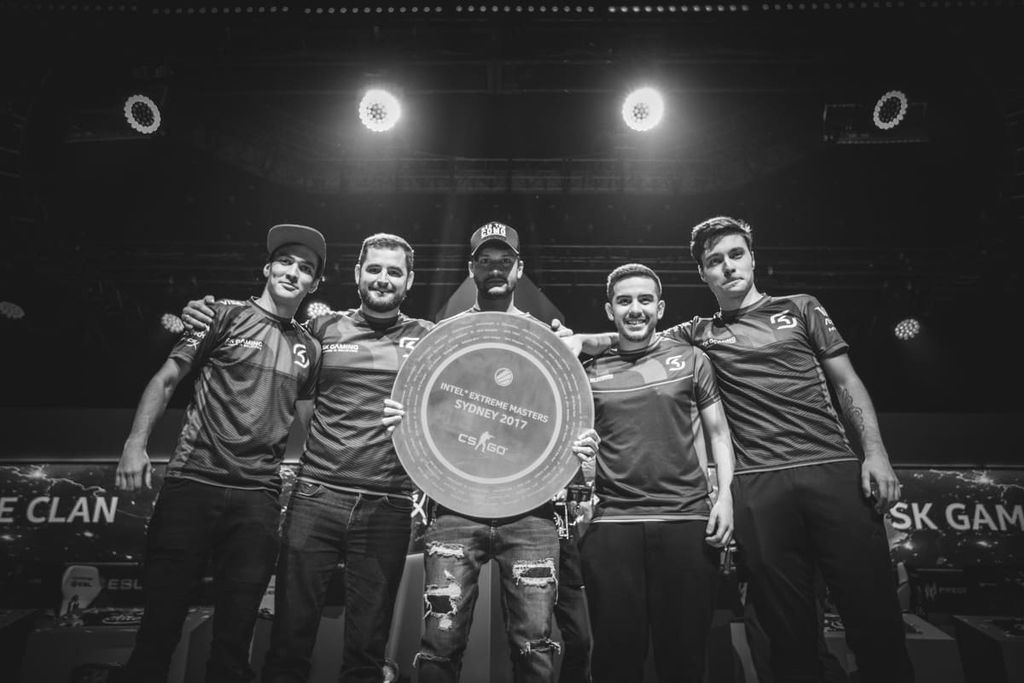
Brazil had players. What it did not have was a reliable pathway, and FalleN eventually concluded that waiting for somebody else to create one was not enough. In 2010, he founded what began as FalleN Academy, using his knowledge to teach aspiring players how to improve. The project later evolved into Games Academy, expanding into educational content, tournaments and opportunities for competitors who might otherwise have had nowhere to begin.
What made the undertaking remarkable was its timing. FalleN was not yet a Major champion sharing wisdom from a position of wealth or global influence. He was still fighting to establish his own career, yet he had already begun helping other players overcome barriers he had not completely crossed himself.
That is where the nickname “The Professor” acquires its real meaning. It was never solely a reference to his tactical intelligence. FalleN understood that one exceptional player would not be enough to sustain an entire region. Brazil needed knowledge to be shared, talent to be cultivated and proof that a professional career was more than an impossible fantasy. Before he constructed a championship team, he began constructing a scene.
Taking Brazil into the unknown
The Brazilian project that eventually competed under Keyd Stars and Luminosity did not arrive in North America with the authority of an established superteam. Its players left behind familiarity, family and certainty to enter a stronger region, without any guarantee that their sacrifice would be rewarded. In the beginning, simply surviving among the established teams represented progress.
Every respectable performance reduced the perceived distance between Brazil and the elite. Every victory made the journey easier to justify, while every defeat exposed another weakness that had to be corrected before the money, patience or opportunity disappeared. They were not expected to take command of world Counter-Strike. They were trying to prove that they deserved to remain within it.
At the centre of the project stood FalleN, carrying both the primary AWP and the tactical direction of a team still discovering the extent of its potential. Around him, the roster developed an extraordinary equilibrium. Fernando “fer” Alvarenga played with little reverence for convention, invading spaces that most players approached cautiously and forcing defences to confront chaos before they could establish control. Marcelo “coldzera” David possessed the colder gift of transforming that chaos into inevitability, frequently appearing to understand a fractured round before everyone else had processed what was happening.
Epitácio “TACO” de Melo accepted the inhospitable positions in which recognition was scarce and punishment plentiful. His contribution was measured not only through the fights he won, but through the freedom his work gave to the stars beside him. Lincoln “fnx” Lau supplied the composure of a player who had already survived earlier eras of Brazilian Counter-Strike, while Wilton “zews” Prado helped convert FalleN’s ideas into a structure the entire lineup could trust.
They were not five separate talents carrying convenient descriptions. They were a functioning ecosystem. fer disrupted the defence, coldzera punished its reaction, TACO absorbed the cost and fnx stabilised the disorder. FalleN decided where the pressure should fall and how the pieces should move around it.
Their ascent was neither immediate nor painless. There were deep tournament runs that ended before the trophy ceremony and defeats that threatened to make years of sacrifice feel futile. Yet each near miss made the possibility of success appear less fanciful. The Brazilians were no longer simply producing respectable performances against Europe’s strongest teams. They were learning how to defeat them.
Then came Columbus.
The moment everything changed
MLG Columbus 2016 was the moment years of private conviction became public truth. Luminosity reached the grand final against Natus Vincere carrying more than the expectations of an organisation. Victory would not merely crown a team. It would vindicate every Brazilian player who had been told that geography, infrastructure and circumstance made the dream unrealistic.
The opening map on Mirage tested their nerve. Luminosity survived a tense 19-17 contest, withstanding a battle that could easily have shifted the final in another direction. On Overpass, however, the tension disappeared. The Brazilians demolished NAVI 16-2 and completed a 2-0 victory that altered the history of Counter-Strike.
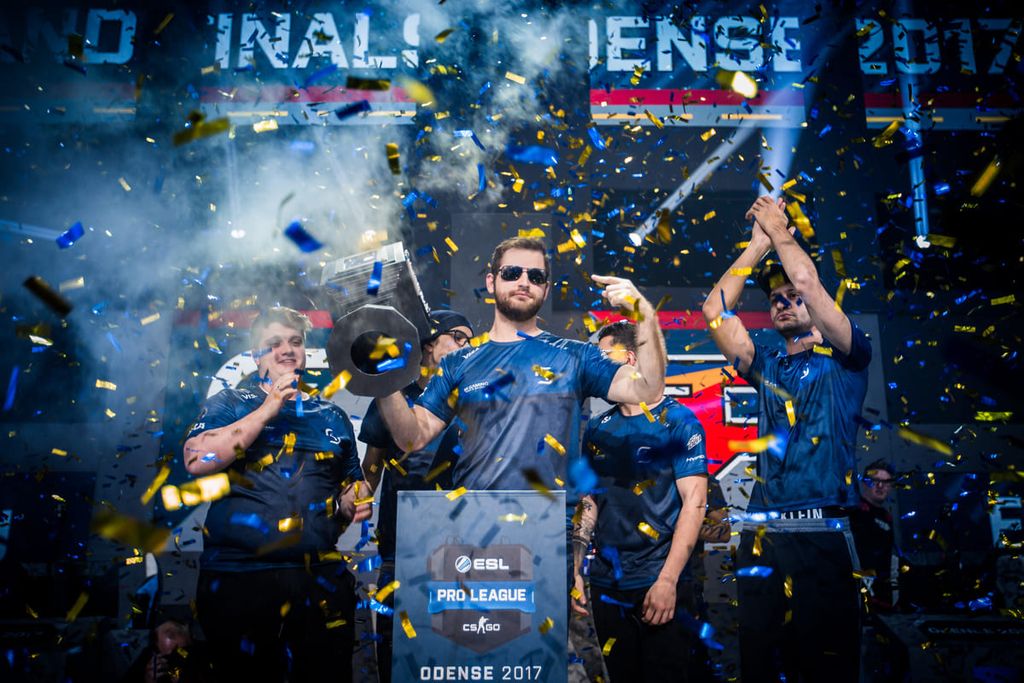
FalleN finished the series with 47 kills, only 26 deaths and a 1.39 rating. When the final round ended, Luminosity became the first team from outside Europe to win a Counter-Strike Major. Until that moment, Brazilian teams could still be dismissed as gifted outsiders trying to penetrate a game whose true centre remained elsewhere. After Columbus, every such argument had to contend with an immutable fact: Brazil had produced the best team in the world.
For the players, it was a championship. For Brazil, it felt like liberation. Every aspiring competitor who had been told that the journey was too expensive, too distant or too improbable finally possessed an answer. Brazilian fans who had spent years watching their teams arrive as underdogs now had champions of their own.
The triumph also refused to become a solitary miracle. Three months later, now competing as SK Gaming, the same core defeated Liquid in the final of ESL One Cologne 2016. Another 2-0 victory made the Brazilians only the second lineup at the time to win consecutive CS:GO Majors.
One Major could have been romanticised as an extraordinary run in which everything aligned. Two in succession constituted dominion. Brazil had not stumbled onto the summit of Counter-Strike. Under FalleN, it had taken possession of it.
The impossible combination
The most extraordinary element of FalleN’s peak was not simply that he was an elite captain. It was that he carried the mental burden of leadership while simultaneously performing as one of the greatest players in the world.
Most in-game leaders surrender some portion of their individual output to the responsibility of directing a team. Their attention is divided between the duel in front of them and the larger contest unfolding across the map. They must recognise patterns, monitor the economy, anticipate rotations, process information from four teammates and decide whether the original plan still deserves to survive. A mechanical mistake may cost one fight, but a leadership mistake can compromise the entire round.
At his peak, FalleN absorbed that cognitive burden without losing his capacity to decide rounds himself. He was not an underperforming player whose tactical value justified his place in the lineup. He was simultaneously the architect of the system and one of its most lethal instruments.
HLTV ranked FalleN as the second-best player in the world for 2016. He recorded 0.41 AWP kills per round, won 63.9% of his opening duels and was recognised as the year’s best AWPer. Those figures would have been remarkable for a player concerned only with his own performance. FalleN was producing them while creating the system, directing four teammates and processing the opposition’s response in real time.
That duality made him almost impossible to replace. A conventional captain could devise the route into a bombsite and trust another player to create the necessary opening. FalleN could devise the plan, call it and then personally eliminate the first defender standing in its way.
His AWPing could be patient and austere, holding an angle until an opponent’s impatience surrendered the opening mistake. At other times, “wallEN” would emerge, firing through smoke, doors and thin surfaces with an almost oracular understanding of where the enemy had chosen to stand.
Then there were the clutches. As teammates disappeared and the arena became louder, FalleN often seemed to become less hurried. The pressure that distorted the judgement of other players appeared to clarify his own. He did not enter desperate situations as though he were searching for an escape. He played them with the conviction of somebody who had already imagined every possible conclusion and was merely selecting the correct one.
Winning without the Major label
SK did not win another Major in 2017, but reducing the year to its Major results would conceal how formidable the team remained. The Brazilians reached nine finals and won eight of them, collecting trophies at ESL One Cologne, the ECS Season 3 Finals, EPICENTER, BLAST Pro Series Copenhagen and ESL Pro League Season 6. FalleN earned two MVP awards and finished sixth in HLTV’s annual player ranking.
By then, SK had become more than a team with exceptional individual ability. It possessed a protean quality, changing its method according to the opponent and the demands of the moment. Some teams were overwhelmed before their defences had settled, with fer tearing open the round and forcing hurried decisions. Others were gradually suffocated as FalleN studied their tendencies, slowed the game and located the weakness they could no longer conceal.
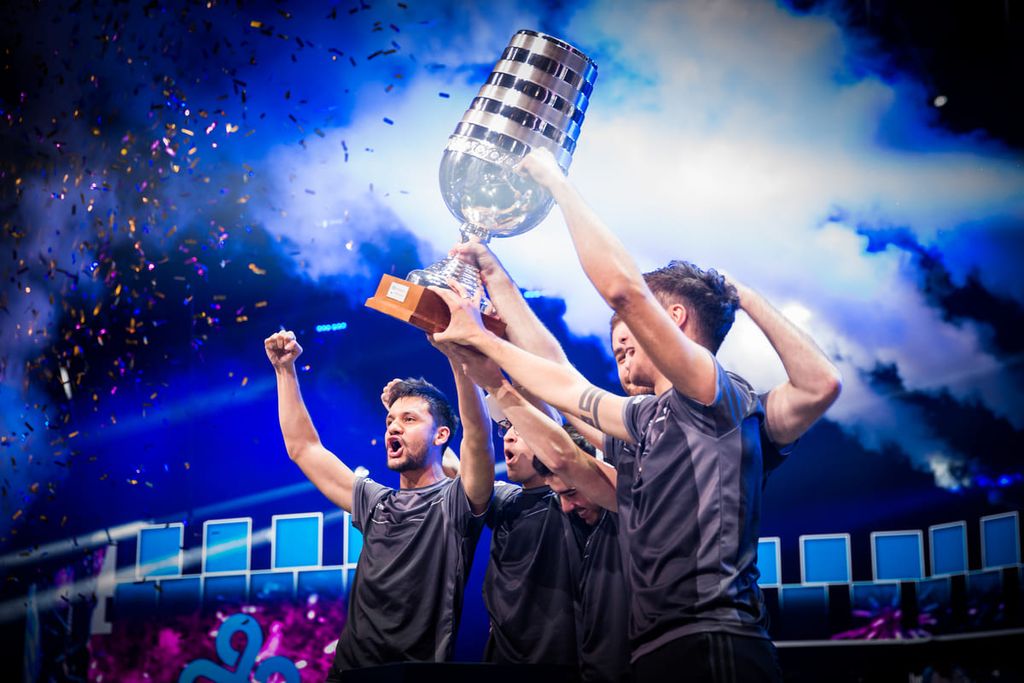
When SK gained a small advantage, coldzera could transform it into something terminal. When the situation demanded sacrifice, TACO entered the uncomfortable space without asking whether the scoreboard would recognise his work. The roster could win through preparation, aggression, patience or sheer individual brilliance. Its greatest strength was that no single identity fully explained it.
Even when the personnel changed, FalleN continued searching for solutions. That was the Professor’s real classroom. The lesson was not one strategy, one lineup or one particular style. It was the ability to keep solving Counter-Strike after the questions had changed.
When an empire begins to fade
No reign survives indefinitely. The years following SK’s dominance became more complicated as the team moved under the MIBR name, experimented with different players and briefly embraced an international lineup. The old cohesion began to erode, while roster instability made it increasingly difficult to recreate the trust that had once made every decision appear instinctive.
The rest of the world had also learned from them. Tactical ideas that once felt revolutionary had been studied, replicated and countered. Opponents became more prepared for SK’s aggression, while the constant changes prevented FalleN from constructing another system with the same clarity and conviction.
FalleN was no longer regularly fighting for recognition as the best player in the world. Each disappointing tournament invited comparison with a version of himself that no veteran could preserve forever. Criticism became less interested in what he had accomplished and more impatient with what he could no longer reproduce.
In 2020, he stepped away from MIBR after major changes to the lineup. He joined Liquid in January 2021, entering an international team and initially surrendering the leadership responsibilities that had defined much of his career. The experiment produced occasional promise, but it never recreated the authority or cohesion associated with his Brazilian teams.
It would have been a rational place to stop. FalleN had already won two Majors, reached the summit of the game and secured a legacy that could not be revised by a difficult final chapter. Continuing meant allowing inconsistent results and declining individual numbers to sit beside the splendour of his peak.
But FalleN’s career had never been governed by self-preservation. He had spent too long challenging probability to begin obeying it at the end.
The Last Dance that became something real
In 2022, FalleN reunited with fer and fnx for the project known as “The Last Dance,” which eventually competed under Imperial. Nostalgia surrounded the lineup from its inception. Its players were older, its name invited sentimentality and its most celebrated achievements belonged to another era.
Many expected the project to function as a ceremonial epilogue, allowing Brazilian fans to see familiar heroes compete together one final time. Instead, they gave the scene another campaign to remember.
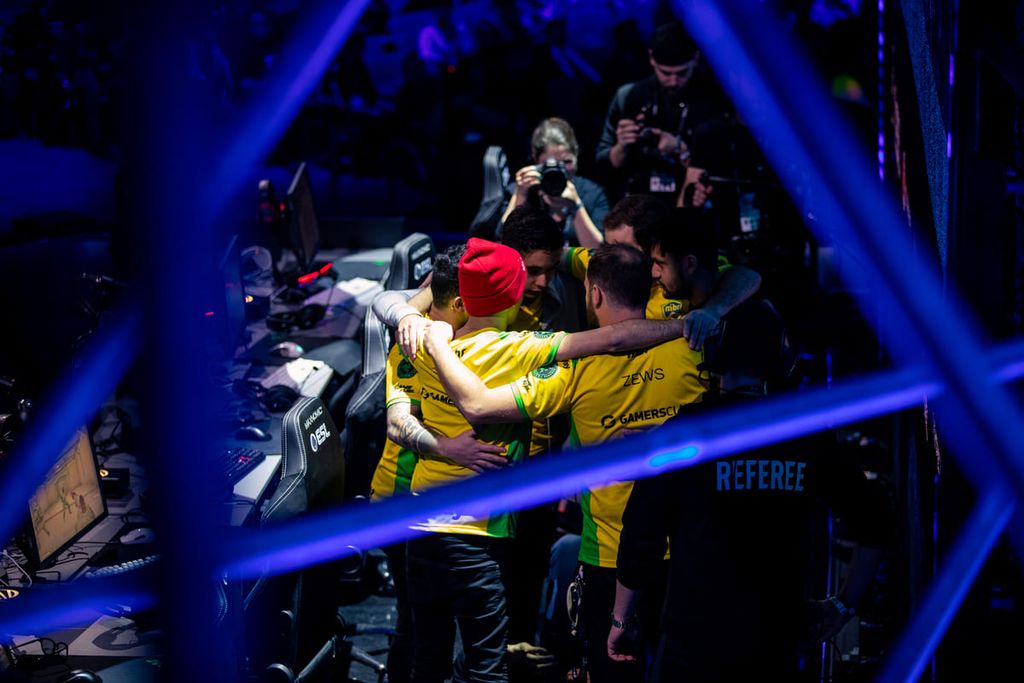
Imperial qualified for the PGL Antwerp Major and advanced into the Legends Stage. Facing elimination against Cloud9, then regarded as one of the strongest teams in the world, the Brazilians survived a triple-overtime battle on Overpass before crushing their opponents 16-3 on Mirage. Imperial eventually finished one series short of the playoffs, but the final placement could not capture the emotion surrounding the run.
For several days, the old Brazilian fervour returned in full. The players were older, the game was faster and the tactical landscape had evolved almost beyond recognition. None of it seemed to matter. FalleN had once again assembled a Brazilian team and persuaded it that rankings, reputations and probabilities were not laws. They were merely arguments waiting to be challenged.
The Last Dance did not restore the old empire, but it proved that its spirit had not yet become a relic.
Uniting generations at FURIA
In July 2023, FalleN joined FURIA, uniting Brazil’s most influential player with the organisation that had carried the country’s competitive hopes through the years following the decline of SK and MIBR. Symbolically, the partnership appeared perfect. On the server, harmony proved considerably more elusive.
FURIA had built its identity around aggression, spontaneity and a relentless willingness to force the game forward. FalleN’s teams traditionally operated with greater deliberation. Combining those philosophies required more than placing famous names in the same jerseys, and the early results reflected the discomfort. Roster experiments came and went, performances remained inconsistent and the individual distance between FalleN and the world’s elite AWPers became increasingly visible.
Retirement once again presented itself as the uncomplicated answer. Instead, FalleN chose reinvention. In 2025, he handed the primary AWP role to young Kazakhstani talent Danil “molodoy” Golubenko and concentrated more heavily on leadership and supportive responsibilities. FURIA also added Mareks “YEKINDAR” Gaļinskis, moving away from a fully Brazilian lineup in pursuit of a higher international ceiling.
For a player whose mythology had been built around commanding rounds with an AWP in his hands, relinquishing the weapon required uncommon humility. FalleN was no longer trying to prove that he could remain the superstar of the team. He was trying to understand what the team required him to become.
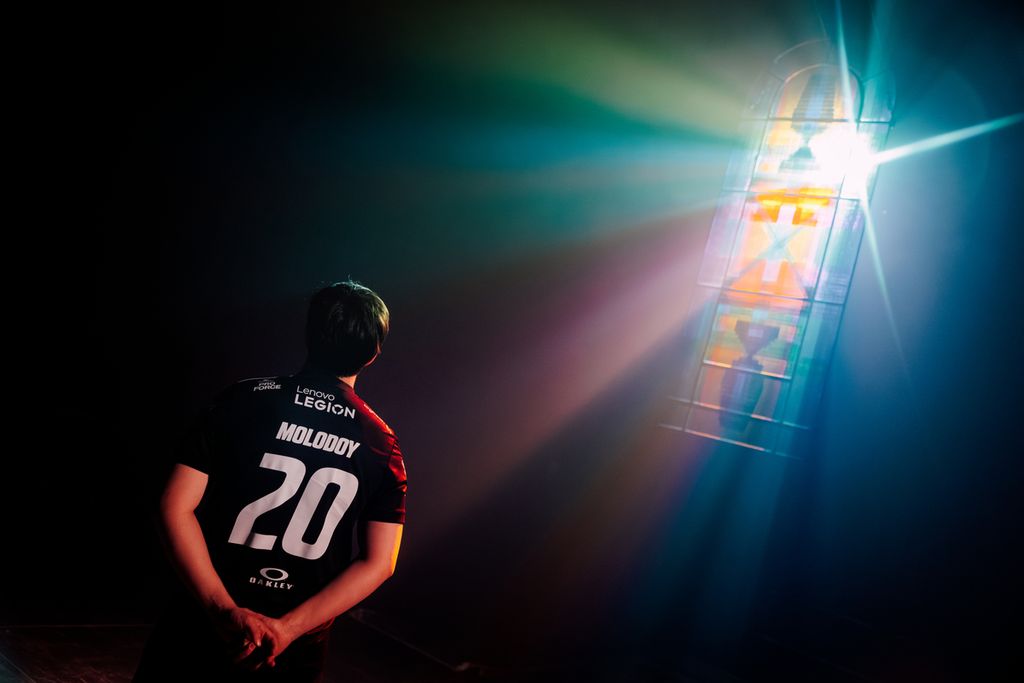
The transformation changed FURIA’s trajectory. They won FISSURE Playground 2, ending a sequence of 38 unsuccessful attempts to claim a Big Event trophy. They followed it with victories at the Thunderpick World Championship, IEM Chengdu and BLAST Rivals Season 2. The Chengdu triumph carried particular authority, with FURIA defeating Vitality 3-0 in the grand final.
By November 2025, FURIA had risen to No. 1 in HLTV’s world ranking for the first time in the organisation’s history. For FalleN, it represented a return to the top team ranking almost eight years after his last appearance there with SK. He also finished among the three finalists for HLTV’s IGL of the Year award.
The distance between those two ascents revealed the full scale of his career. In 2016, FalleN reached No. 1 as an elite AWPer leading a Brazilian lineup that transformed the history of the game. In 2025, he returned as an ageing rifle-support player, guiding a mixed-generation international roster and willingly surrendering the weapon that had once defined him.
The first ascent demonstrated his brilliance. The second revealed the depth of his leadership.
More than the sum of his trophies
FalleN’s competitive record guarantees his place among Counter-Strike’s immortals. He won two Majors, led some of the strongest teams of the CS:GO era, reached the highest individual rankings and collected championships across vastly different periods of the game.
Even that résumé feels inadequate. Trophies explain what FalleN won, but they do not explain what he made possible. They cannot count the Brazilian players who began treating Counter-Strike as a legitimate ambition after watching Luminosity lift the trophy in Columbus. They cannot calculate how many careers were influenced by Games Academy, his educational work or the infrastructure he helped establish.
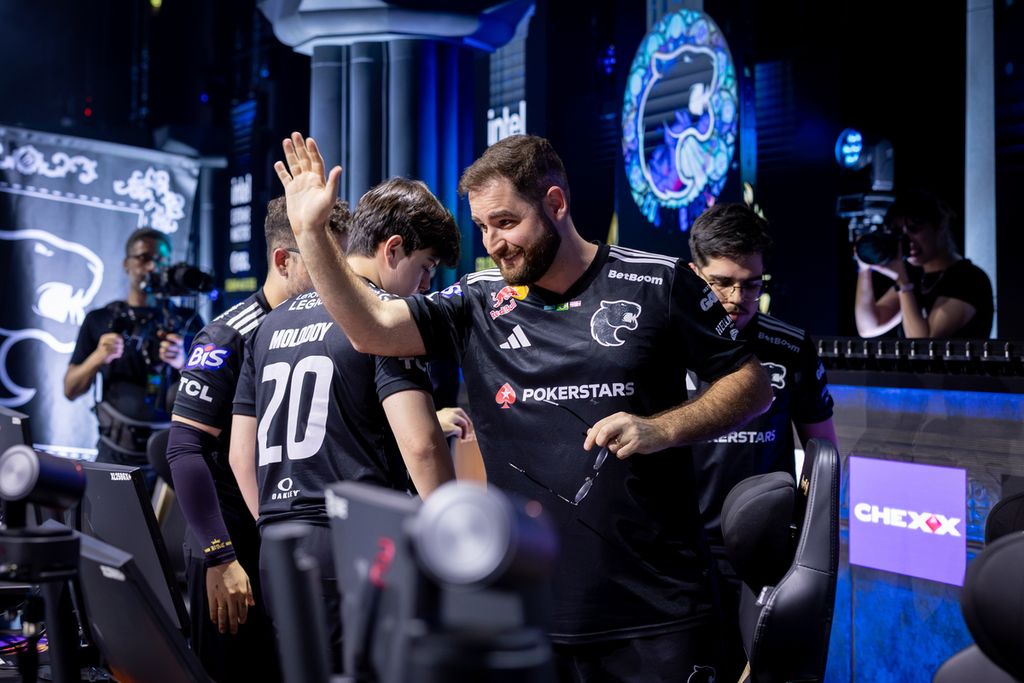
Nor can they measure what it meant for Brazilian supporters to see somebody speaking their language, carrying their flag and refusing to behave as though elite Counter-Strike permanently belonged to another part of the world.
FalleN gave Brazilian Counter-Strike a face, but his deeper contribution was giving it continuity. He demonstrated that players from an underdeveloped region did not have to wait for an established power to rescue them. They could share knowledge, build their own structures and cross the distance themselves.
At his peak, he showed that leadership did not always demand the surrender of individual brilliance. Later, he showed that genuine leadership could require precisely that sacrifice. He relinquished the weapon that had shaped his mythology, accepted a less glamorous role and found a new way to make his team stronger.
He also proved that decline did not have to conclude in surrender. A veteran could endure criticism, relinquish status, reinvent his purpose and still discover a route back to the top long after the world had declared his era finished.
When FalleN finally disconnects from a professional server for the last time, the scoreboard will preserve the final kills, deaths and assists of his career. It will not preserve the belief he leaves behind. Some legends dominate a game. FalleN taught an entire nation that it belonged there.